
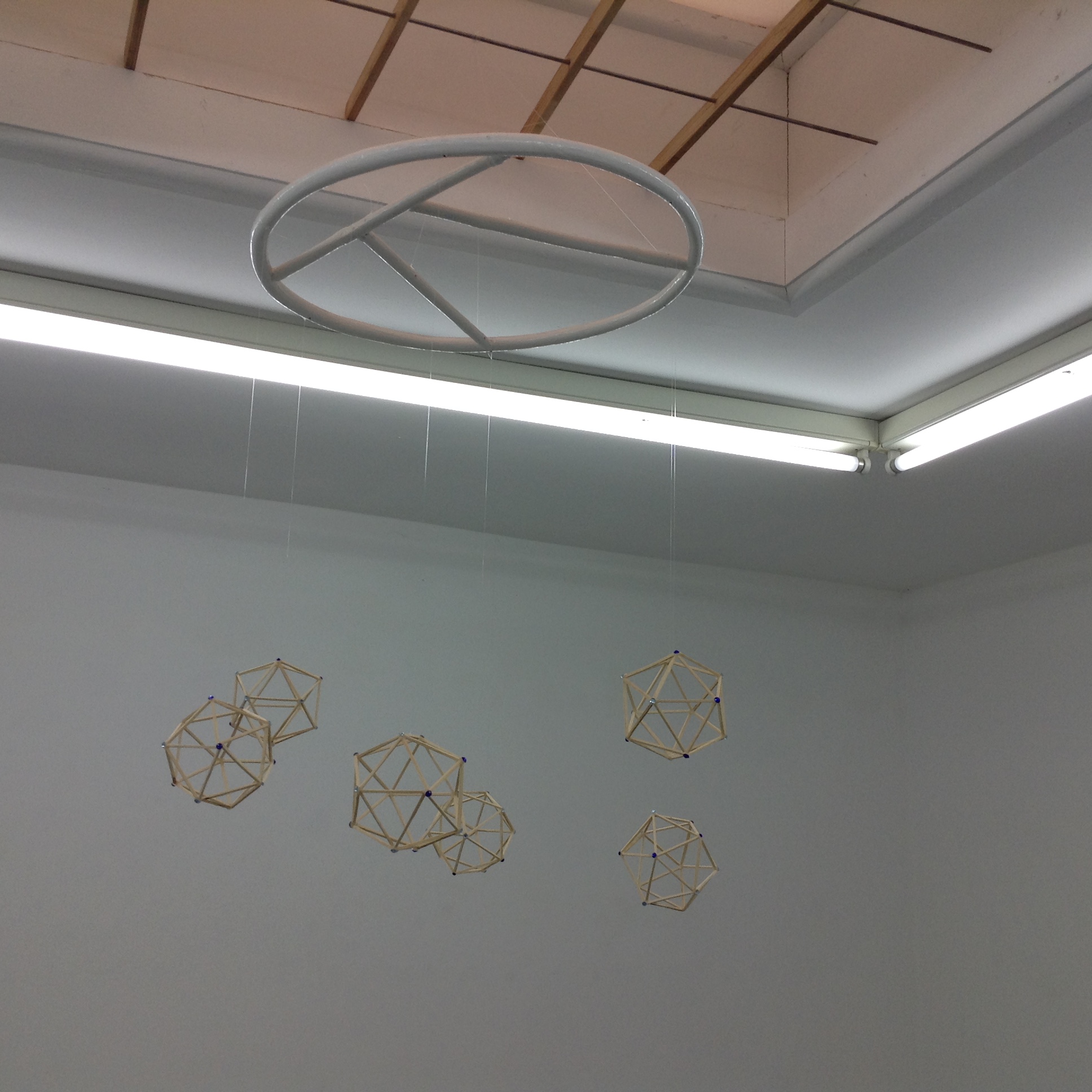
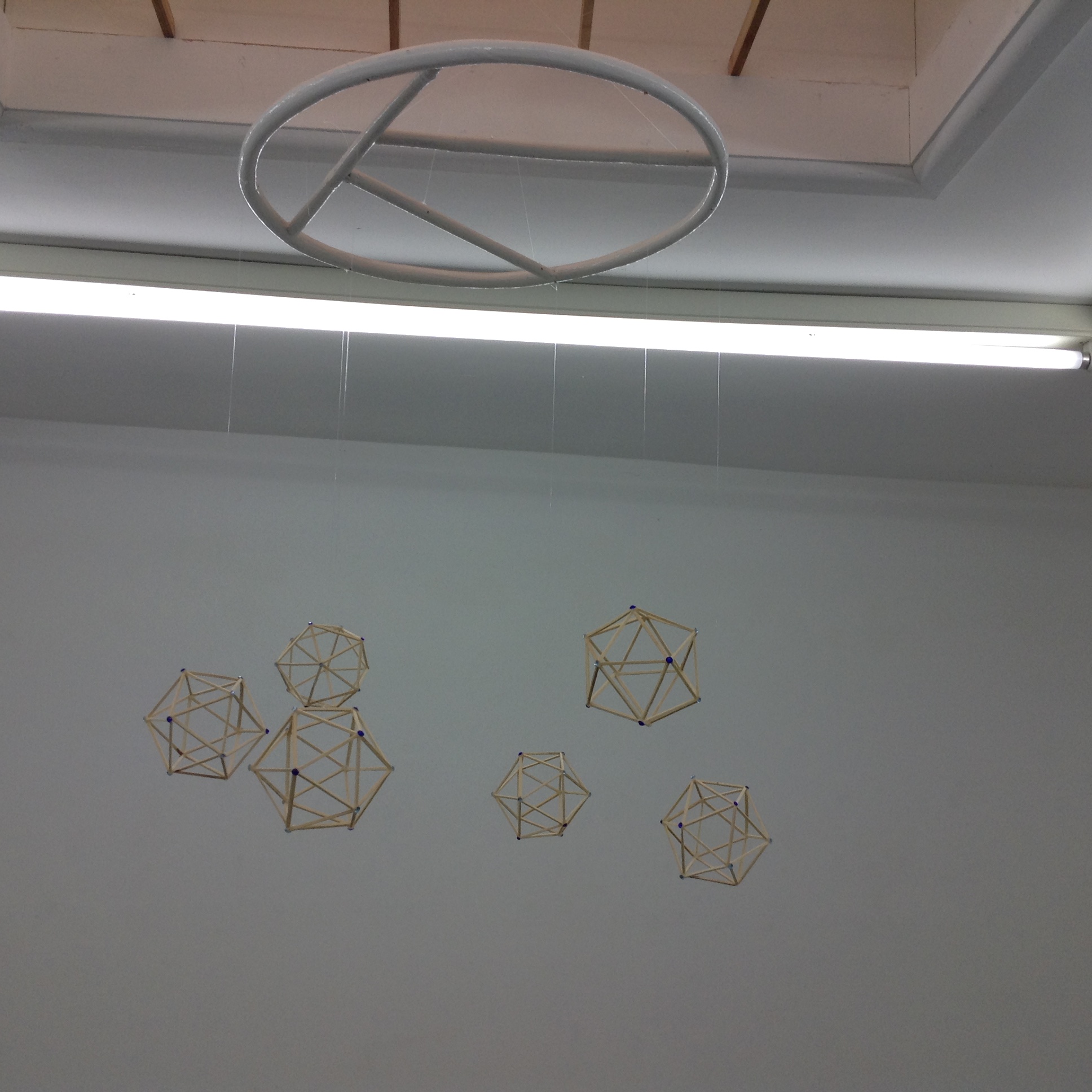
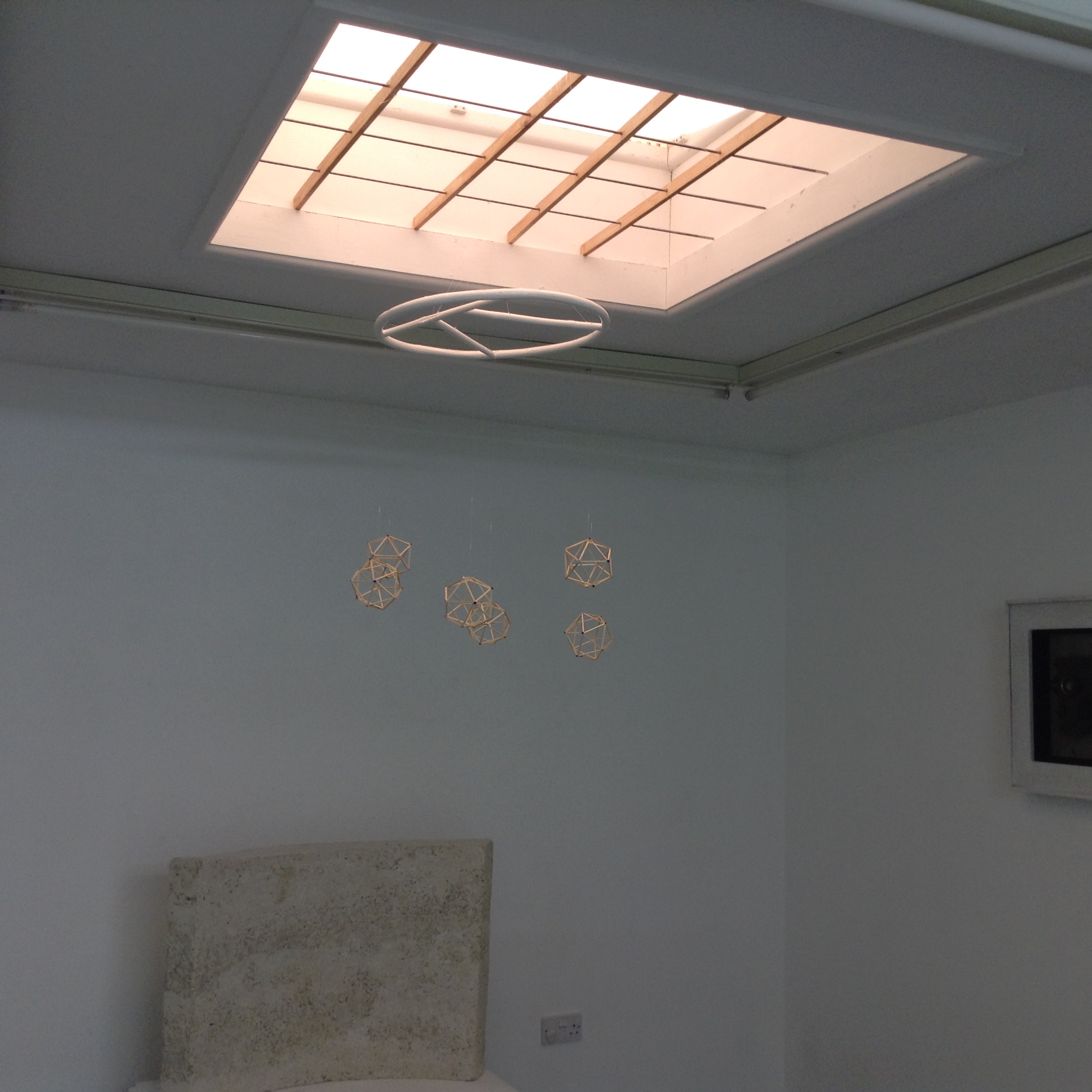
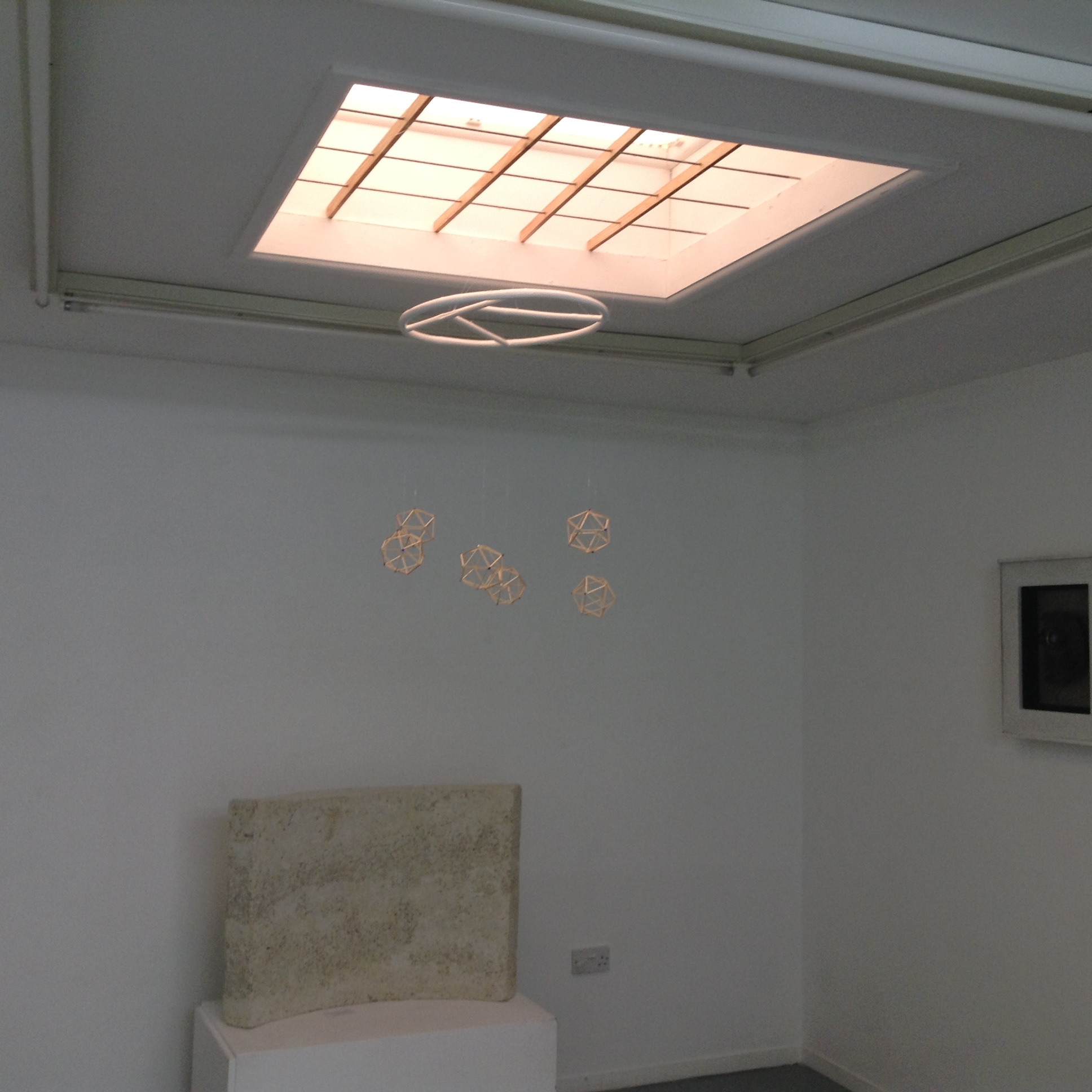
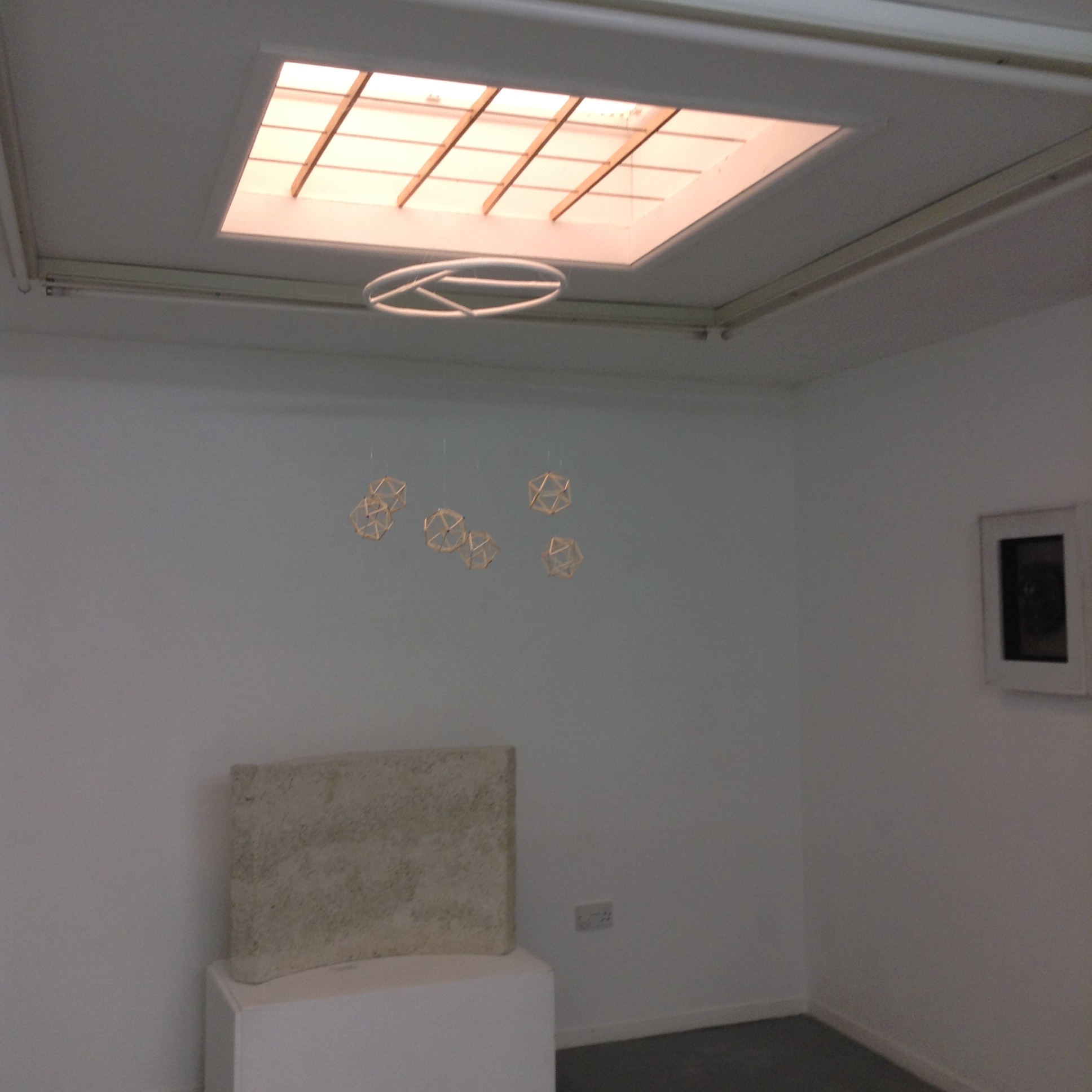
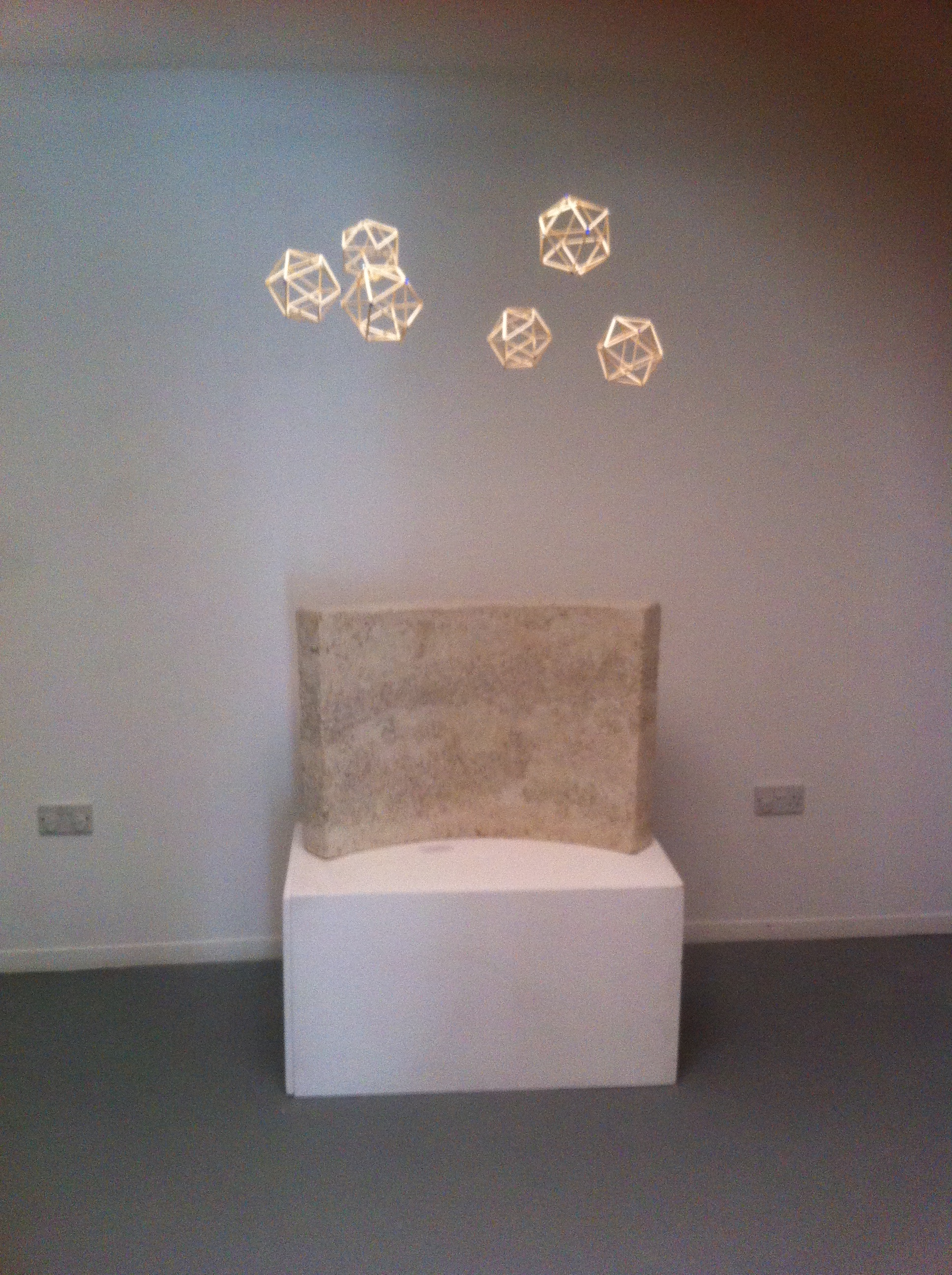
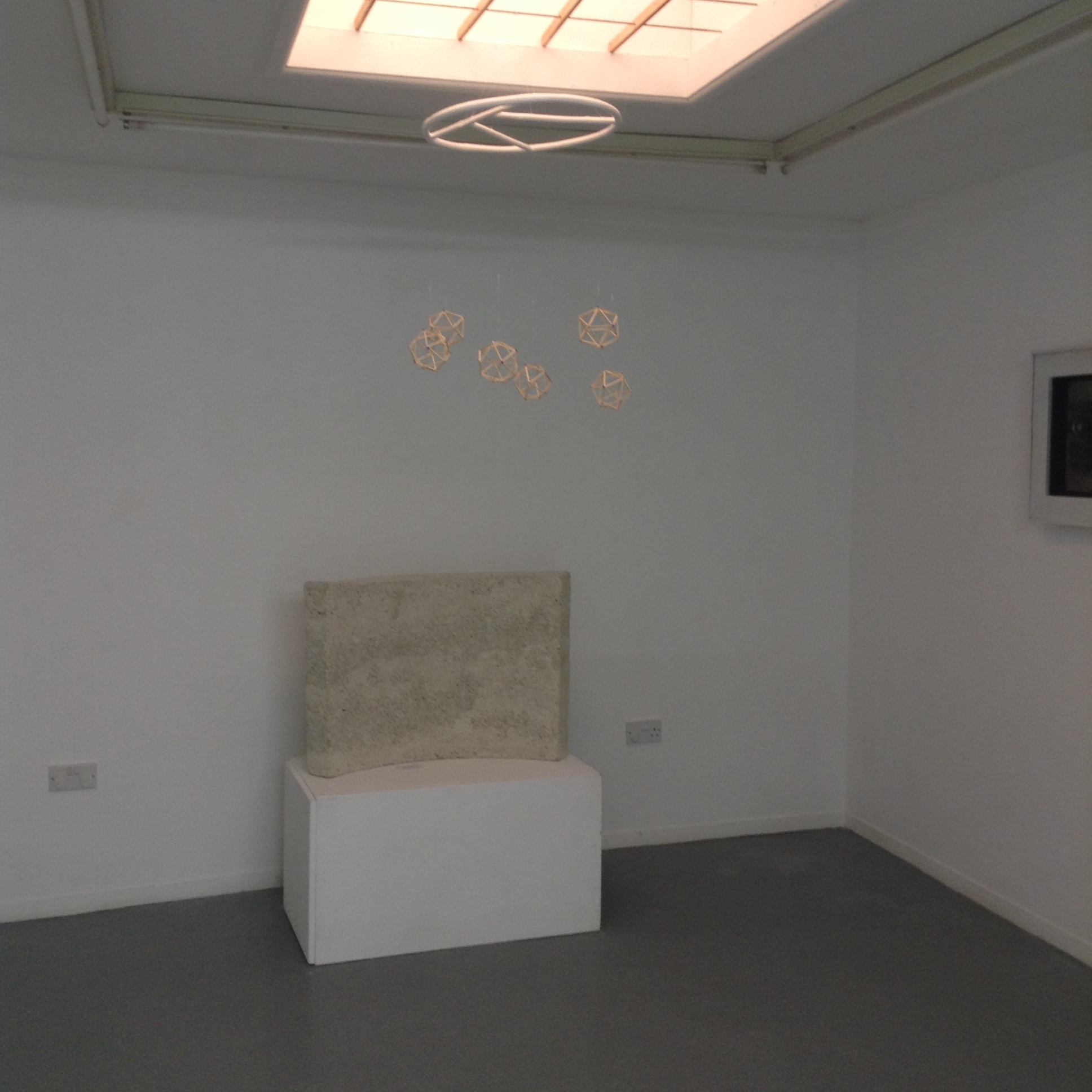
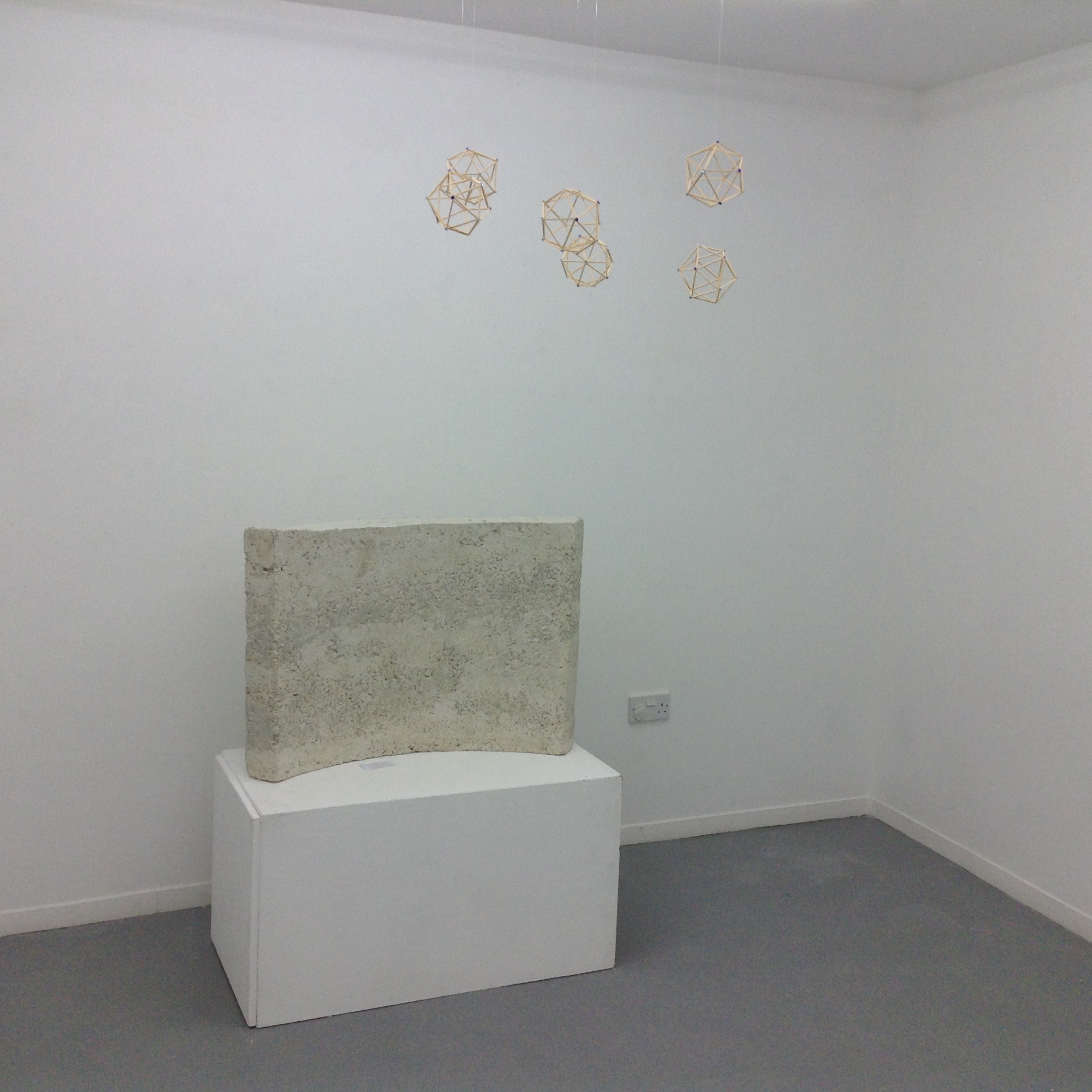
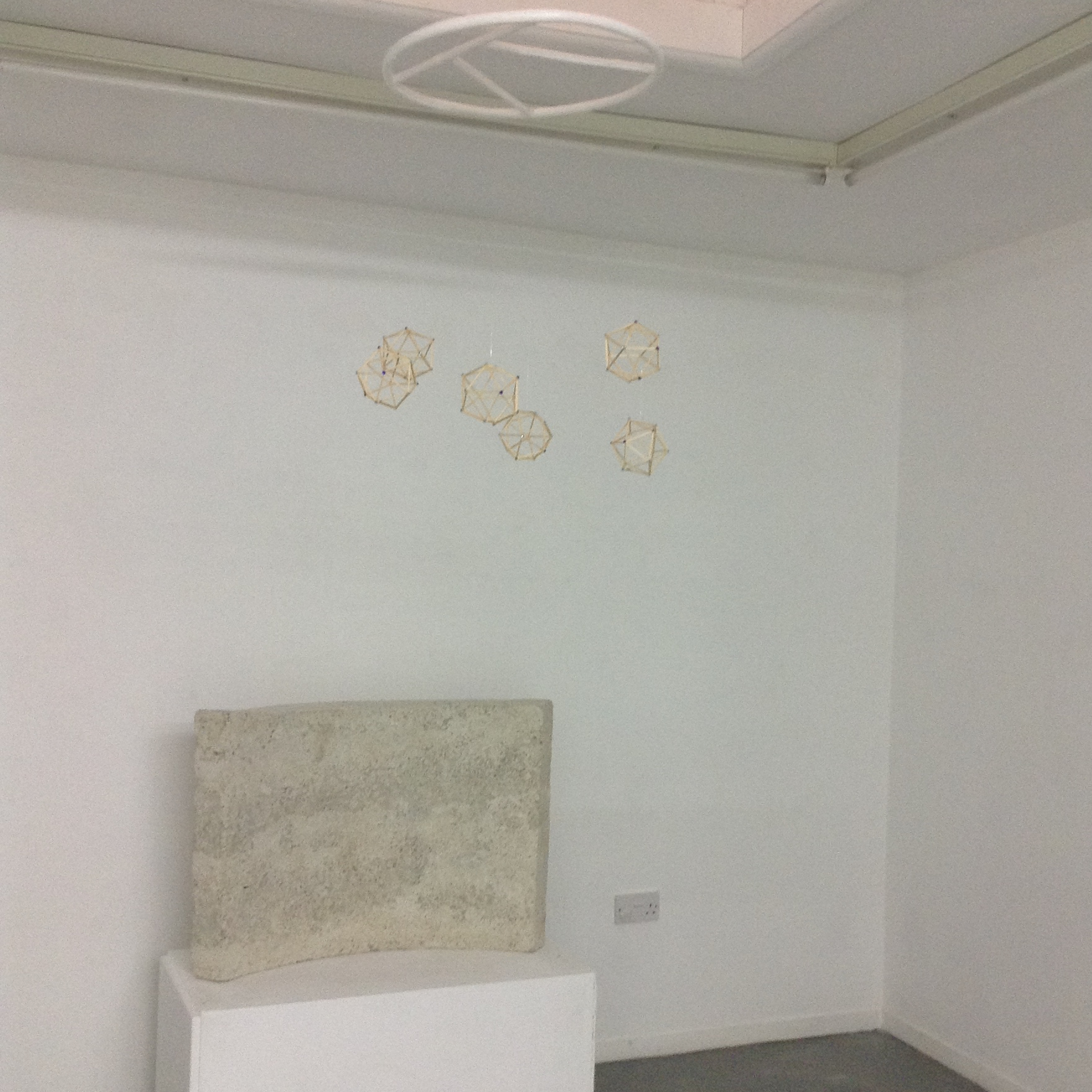
Classic Greek geometry uses a straight edge and compasses in its construction, no geometric instruments like protractors or triangles, I used this approach to make six icosahedrons, a fundamental 3-D shape known to the ancient Greeks. Each icosahedron has 20 faces, outlined by thin laths of wood and each vertex holds a blue “jewel” because the icosahedron was a symbol for water.
For the ancient Greeks, the circle had a particular significance. In a way it was an expression of perfection. No matter how large or small the circle, the ratio of the perimeter to the diameter was always the same. Pi was the Greek letter used to represent this ratio. In the mobile the icosahedrons are suspended from a circle containing Pi to represent the importance of this concept.
In the gallery, the age of the culture used to develop the mobile is in contrast to the modern light-weight concrete used to make the other exhibit.

 alancossinsART